GDP Up 3.4%; OppFi Abandons Bank Bid; Bilt Acquires Lava

GDP grew faster than expected. PCE is running hot. The labor market is holding up. OCC releases “Super Intelligence” framework. OppFi abandons bank bid. Galaxy applies for trust bank charter. Kalshi raises $1Bn. Collective lands Series B. Bilt acquires sports loyalty startup.
We’re partnering with Offchain to integrate tokenization directly into our lending platform, enabling assets to be tokenized at origination. Read the full announcement here.
New here? Subscribe here to get our newsletter each Sunday. For even more updates, follow us on LinkedIn.
GDP Grew 3.4% In Q3
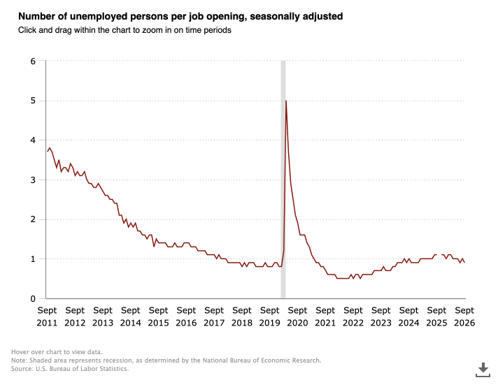
U.S. GDP grew faster than expected in the third quarter, despite the disruption from the ongoing conflict in the Middle East. The economy expanded by an annualized 3.4%, exceeding analysts’ estimates of 3.2%. However, inflation, as measured by the PCE Price Index, remains elevated, coming in at an annualized rate of 3.6% in September. Consumer spending coupled with the AI buildout boom is keeping the economy running hot. The result is something of a split screen: consumers are downbeat, despite economic indicators that, by themselves, suggest robust growth. The most recent JOLTS report from the Bureau of Labor Statistics shows 7.5Mn job openings. ADP’s private payroll report for October showed an increase of 86,000 roles.
OCC Releases “Super Intelligence” Framework
Last week, the Office of the Comptroller of the Currency released a framework for its bank examiners when analyzing banks’ use of “super intelligence,” more commonly referred to as artificial intelligence or AI. According to the OCC’s summary, examiners may use the framework to identify AI-specific considerations beyond existing model risk management, governance, technology, compliance, and operational risk factors. The framework encourages bank examiners to tailor their supervisory work to the nature and potential consequences of an institution’s use of AI. The OCC directs examiners not to treat AI as a distinct category of risk on its own, and banks do not need to define a separate AI “risk appetite.” The OCC said it expects to update the framework regularly, given the rapid pace of technological change.
OppFi Abandons Bank Bid
OppFi has withdrawn its applications to the Fed, FDIC, and OCC related to its proposed acquisition of BNCCORP and its subsidiary, BNC National Bank. According to the company’s statement, OppFi “proactively engaged” with regulators prior to entering into the transaction and has responded to information requests from regulators. But, the company said, it “has not had a meaningful opportunity to engage with federal regulators to address potential concerns.” OppFi CEO Todd Schwartz blamed a lack of clarity from regulators in an email to trade publication American Banker. “The lack of clearly articulated standards for evaluating our applications, combined with communication restrictions inherent in the process, limited our ability to meaningfully address potential areas of concern,” Schwartz wrote. The news follows fellow higher-APR lender Enova’s withdrawal of its applications to acquire Grasshopper Bank in September.
Galaxy Applies For Trust Bank Charter
Galaxy Digital is the latest to submit an application to the OCC to charter a national trust bank. The company would use the entity, if approved, to provide fiduciary services alongside its existing trading, staking, and custody operations. Currently, Galaxy holds over 50 licenses across the U.S., Asia, and Europe, including an SEC-registered broker-dealer license. Obtaining the OCC charter would potentially simplify Galaxy’s licensing in the U.S. Galaxy founder and CEO Mike Novogratz commented on the application, saying, “Digital assets are becoming an increasingly important part of the global financial system, and Galaxy has spent years building the capabilities to support that transition. A national trust charter would be an important next step, allowing us to bring more of our services under a single federal framework and expand how we serve clients as adoption accelerates.”
Kalshi Raises Another $1Bn
Kalshi, one of the leading prediction markets, announced it has raised a fresh $1Bn in funding. The round values the company at an eye-popping $40Bn. While Kalshi is best known for its occasionally controversial prediction market offering, it is seeking to expand beyond event contracts to compete more directly with traditional financial exchanges by supporting trading of a wider variety of assets. The $1Bn round was co-led by Wellington and Sequoia, with participation from Dragoneer Investment Group and Tiger Global Management. The new funding comes just five months after Kalshi raised $1Bn in a round led by Coatue that valued the company at $22Bn. Kalshi cofounder and CEO Tarek Mansour commented on the fundraise, saying, “There are few categories in recent history that have scaled this quickly outside of AI. Event contracts could become a trillion-dollar market, and we’re still in the early stages of that transition.”
Collective Lands $40Mn Series B
Collective, which offers an AI-native financial operating system, announced it has raised $100Mn in new funding, including its $40Mn Series B. The B round was led by QED, Gradient Ventures, and General Catalyst, with participation from Intuit Ventures, FT Partners, and SemperVirens. General Catalyst’s Customer Value Fund is providing the additional $60Mn to fuel customer acquisition. Collective targets “Businesses-of-One,” with the goal of empowering solo-preneurs to operate at an expanded scale. The company plans to use the new funding to expand its product development in banking and insurance. Collective cofounder and CEO Hooman Radfar explained, “AI is leveling the playing field, making it possible for a single individual to build a powerful, highly profitable enterprise. Traditional accounting firms scale by adding people. Collective scales with intelligence.”
Bilt Expands Into Sports Loyalty By Acquiring Lava
Bilt Rewards announced it will acquire sports loyalty platform Lava in a $300Mn deal. While Bilt is often thought of as a credit card company, its card, now issued by Column, is one piece of its wider loyalty platform, which allows users to earn points on their housing-related payments. Lava’s sports-focused loyalty and rewards platform allows venues and teams to ingest data from point-of-sale, ticketing, and identity systems to create and offer customized benefits. Lava currently works with more than 50 professional sports teams, including the Detroit Lions, Carolina Hurricanes, and Denver Nuggets. Bilt cofounder and CEO Ankur Jain commented on the deal, saying “Sports have an extraordinary ability to bring people together, yet the relationship between teams, fans and their neighborhoods has barely been tapped. Lava has built incredible technology connecting sports organizations with their fans. Bringing that together with Bilt opens up an entirely new frontier for what membership and loyalty can mean.”
