Oregon DIDMCA Opt Out; Revolut Applies for Charter; SquareFi Emerges from Stealth
.png)
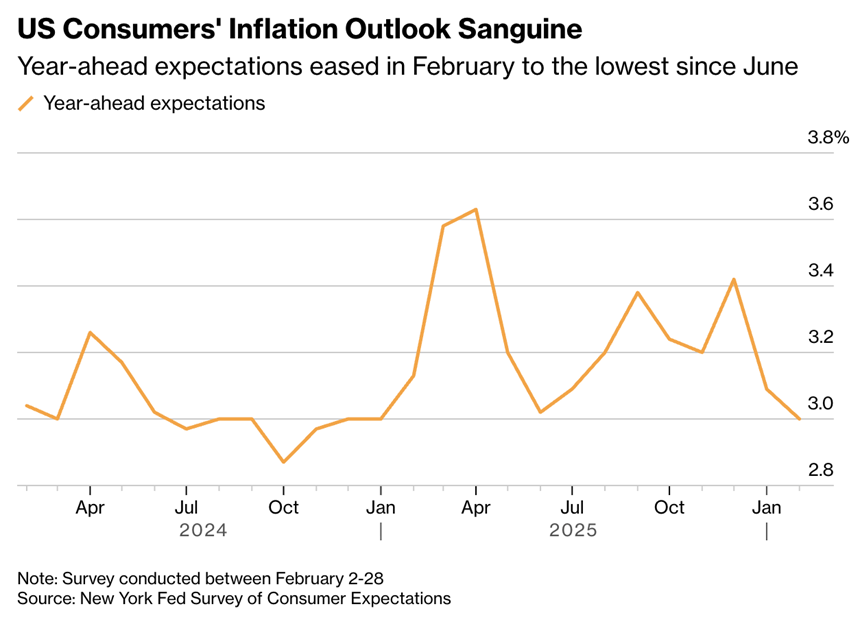
Consumers’ inflation expectations stay steady (pre-Iran war). Cash-strapped homeowners turn to BNPL. Oregon passes DIDMCA opt out. Evervault, Kast announced fundraises. Revolut, Upstart, and Zerohash file charter applications. SquareFi emerges from stealth.
We partnered with Thredd to ease US entry for global fintechs. By combining our proprietary core banking infrastructure and regulatory expertise with Thredd’s international processing power, we’re creating a seamless opportunity for fintech innovators to launch payment solutions and scale stateside. Learn more to learn about how we're enabling fintech expansion.
New here? Subscribe here to get our newsletter each Sunday. For even more updates, follow us on LinkedIn.
Cash-Strapped Homeowners Turning to BNPL
Consumers’ expectations for future price increases remained largely unchanged last month, according to the Fed’s monthly Survey of Consumer Expectations. The survey was conducted from February 2 to 28, prior to the beginning of the war in Iran. Consumers expect inflation of 3% in the coming 12 months, down slightly from expectations of 3.1% in January's survey. Actual inflation in February slowed, with prices up 0.2% from January and 2.5% vs. February 2025, the slowest rate of inflation in almost five years. However, volatile energy prices risk putting upward pressure on inflation, complicating future Fed rate setting decisions. Meanwhile, Americans are increasingly uneasy about the job market, with the share of workers expected to voluntarily leave their job in the next 12 months hitting a record low. Cash-strapped homeowners are increasingly turning to buy now, pay later services after maxing out their credit cards, new research from the JPMorgan Chase Institute shows. The data, published earlier this month, shows that people who are paying mortgages or are preparing to buy their first home are most likely to use BNPL services when financially stressed.
Oregon Passes DIDMCA Opt Out
Oregon has become the latest state to pass legislation opting out a key provision of the 1980 Depository Institutions Deregulation and Monetary Control Act, commonly referred to as DIDMCA. The measure, if signed by the governor, also updates licensing requirements and clarifies when Oregon law applies to loans made online. By opting out of DIDMCA, Oregon is seeking to prevent out-of-state state-chartered banks from making loans to Oregon consumers at interest rates that exceed Oregon’s rate cap. Most consumer loans in Oregon can carry a maximum APR of 36%. The Oregon measure follows a recent decision in the Tenth Circuit over Colorado’s DIDMCA opt out, which ruled that a loan is “made in such State” if either the borrower or lender is located in the opt-out state. A petition to rehear the Colorado case en banc has been filed.
Evervault Announces $25Mn Series B
Encryption tech platform Evervault announced it has raised a $25Mn Series B. The round was led by Ribbit Capital, with participation from Sequoia, Index Ventures, Kleiner Perkins, and Operator Partners. The company, which began with a focus on securing payment card data, says that it is “building the internet's clearing house for sensitive data.” Evervault’s platform integrates network card tokens, 3D-Secure authentication, and card data enrichment for a variety of use cases. Customers include popular expense management and corporate card startup Ramp, as well as Sling and Stitch. Evervault founder and CEO Shane Curran commented on the raise, saying, “At Evervault, we believe sensitive data should be treated like hazardous material. "We're building the Internet's trust layer, embedding encryption directly into the application architecture so it stays encrypted by default, not by policy alone.”
Kast Raises $80Mn for Global Stablecoin Platform
Stablecoin-powered banking platform Kast announced it has raised an $80Mn Series A. The fundraising round was co-led by QED and Left Lane Capital. Kast leverages USD-denominated stablecoins to offer pay-in and pay-out capabilities in more than 190 countries. The company says it already serves more than one million users and is processing nearly $5 billion in annualized transaction volume. Kast plans to use the new funding to continue scaling its business, with a focus on North America, LatAm, and the Middle East. Kast founder and CEO Raagulan Pathy commented on the news, saying, “The latest funding, raised less than 18 months from launch, reflects the confidence of leading investors in the stablecoin neobank thesis - and in Kast’s ability to execute it at global scale. Our end game is clear, to be the leading neobank for the stablecoin world, both for consumers and businesses.”
Charter Watch: Revolut, Upstart, Zerohash
The deluge of new bank charter applications continues. U.K.-based Revolut filed with the OCC to form a full-service deposit-taking national bank, as well as a corresponding application for deposit insurance. The company’s U.K. bank also completed its “mobilization” phase and has received regulatory approval to begin operating. Revolut founder and CEO Nik Storonsky commented on the company’s U.S. bank charter application, saying, “Filing for a national bank charter is a major milestone toward our vision of building the world’s first truly global banking platform. This charter will give us the direct control needed to innovate faster and deliver the Revolut experience to millions more Americans as we move toward our goal of 100 million customers.”
AI-powered lender Upstart is also throwing its hat in the ring, applying to form Upstart Bank, N.A. and a corresponding application for deposit insurance. If approved, holding a charter and being able to take insured customer deposits would reduce Upstart’s operational, regulatory, and financial costs, the company says. Upstart Holdings, Inc. will also apply to the Federal Reserve to become a bank holding company. Paul Gu, Upstart’s CTO, commented on the decision to apply for a charter, saying, “The time is right to launch the first bank built from the ground up on AI. Applying for a bank charter is the natural evolution of our business as we’ve grown in size, scale, and product offerings. This will allow us to save borrowers even more time and money, and streamline our partnerships with banks, credit unions, and institutional credit funds.”
Finally, crypto infrastructure company Zerohash has applied to the OCC to form a national trust bank. The company, which partners with firms that include Morgan Stanley, Franklin Templeton, and Stripe described the move as a “natural next step in offering robust global licensing coverage and continuing to expand our product offering.” A trust bank charter does not allow for deposit-taking or lending activities. The significant number of crypto- and digital asset-related firms applying to form national trust banks has engendered some pushback from corners of the traditional financial services industry. Brandon Milhorn, CEO of the Conference of State Bank Supervisors, recently commented on the types of business models some trust bank applicants seem to envision, saying, “Now, the OCC seems to think that they can take bits and pieces of all these authorities and cobble them together in any number of ‘Franken-charters. But that is inconsistent with the history of the National Bank Act and the OCC’s specific, limited chartering authority.”
SquareFi Emerges from Stealth
SquareFi, a global stablecoin infrastructure company, has officially emerged from “stealth mode.” The company describes its goal as to “enable fintechs and global platforms to move money faster, launch financial products quickly, and operate across 150+ countries with support for 25+ currencies.” SquareFi’s platform combines card issuing, named IBANs (international bank account numbers), crypto wallets, and fiat-to-crypto on- and off-ramping. SquareFi claims to have direct access to a broad set of local payment rails, including Swift, SEPA, ACH, and wires. The company, which previously raised a pre-seed round in January 2025, says it is planning to raise an additional $10Mn-$15Mn at an approximate valuation of $100Mn.
