Global GDP Slows; Paradigm Raises $1.2Bn Fund; Swift Tests Blockchain Ledger
.png)
Global GDP slows. Fed is keeping an eye on AI spending boom. Sony’s Connectia and Morgan Stanley win conditional approval of trust bank charters. Klarna applies for Utah ILC. Forager ups offer for Repay. Paradigm raises new $1.2Bn fund. Swift testing blockchain-based ledger. Big banks mull acquiring debit network.
Agentic commerce adoption hinges on architects building consumer protections into financial infrastructure from the beginning. Our Head of Product, Andrew Lambert, explains in his new Insights piece why infrastructure providers must embed consumer protections from day one and which dimensions demand immediate attention.
New here? Subscribe here to get our newsletter each Sunday. For even more updates, follow us on LinkedIn.
Global GDP Growth Slows
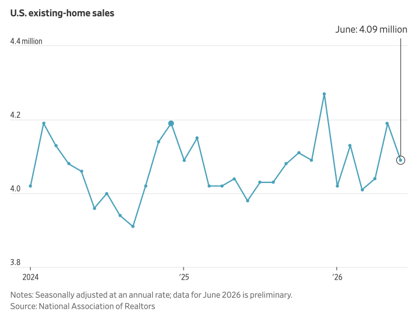
The International Monetary Fund released its updated World Economic Outlook last week. The new report projects global GDP growth slowing to 3.0% this year, down from an average of 3.5% in 2024-2025. The report pointed to the negative impact of the war in Iran, which has been somewhat offset by AI-related investment. The IMF forecasts overall global inflation in 2026 to reach 4.7%, a marked increase from the 4.1% seen in 2025. The report notes that the disinflation trend that began in early 2024 has “stalled.” That backdrop helps explain somewhat more hawkish sentiment from Federal Reserve officials. While the Fed held rates steady at its most recent meeting, minutes show broad agreement the central bank will need to hike rates if inflation remains elevated this year. The meeting minutes also revealed the Fed is paying more attention to how the boom in AI-related investment is impacting inflation. The resurgence of military activity in the Middle East won’t make the Fed’s life any easier. Oil prices spiked on the renewed fighting, with fresh uncertainty over the fate of the Strait of Hormuz. Finally, the spring home selling season ended on a somewhat sour note. Existing home sales fell 2.4% in June, dropping to a seasonally-adjusted rate of 4.09Mn. The closely watched metric fell well short of analysts’ expectations of a 0.7% increase.
Charter Roundup: Sony, Morgan Stanley, Klarna
Sony and Morgan Stanely both received conditional approvals of their respective national trust bank charter applications. Sony’s Connectia Trust is expected to begin operating in 2027. Connectia, which will be a wholly-owned subsidiary of Sony Bank, will be capitalized with $40Mn. Sony plans to use the national trust bank charter to issue a USD-denominated stablecoin, which, the Japanese conglomerate has said, consumers will be able to use to pay for Sony content like movies and games. In a statement on the conditional approval, Sony commented in part, “The establishment of this trust subsidiary is intended to contribute to the development of a medium‑ to long‑term business foundation for the Sony Financial Group’s digital asset businesses. Sony Bank plans to establish the trust subsidiary and proceed with preparations for the commencement of business.”
Meanwhile, Morgan Stanley also received conditional approval to form a national trust bank, Morgan Stanley Digital Trust National Association. Per the Office of the Comptroller of the Currency’s conditional approval, the trust bank must maintain a minimum of $50Mn in tier 1 capital. Morgan Stanley has said the primary activities of the trust will include the custody of digital assets and related activities, such as the purchase, sale, swap, and transfer of digital assets. Morgan Stanley currently partners with crypto infrastructure firm Zerohash, which is also seeking a trust bank charter, to offer crypto trading on Morgan Stanley’s consumer brokerage, E*Trade.
Finally, Swedish buy now, pay later provider Klarna filed applications to charter a Utah industrial bank and a corresponding application with the FDIC for deposit insurance. Klarna is licensed as a bank in its home country of Sweden, allowing it to operate as a bank in much of the E.U. In the U.S., Klarna has partnered with WebBank for many of its offerings, including its card products, savings account, and some of its lending products. Klarna cofounder and CEO Sebastian Siemiatkowski commented on the news, saying, “Our own banking license is the natural next step, giving customers tools to borrow responsibly and build financial confidence, while bringing greater competition, innovation, and choice to consumers and merchants alike.”
Forager Ups Offer for Repay
Forager Capital Management has upsized its take private offer for payment processing provider Repay to $5.25 per share. Forager’s updated bid reflects a 91% premium to the company’s share price as of the time of the offer. The new offer would give Repay an enterprise valuation of $1.4Bn, including the assumption of debt. Repay offers verticalized payment processing software and primarily serves customers in the automotive lending, personal lending, and receivables management spaces. Forager already holds a 12.4% stake and has argued the company would benefit from operating as a private company. Forager partner Johnny Wilhelm made the investment manager’s case in a public letter, saying, “Our increased price reflects our continued conviction in the value of Repay and our belief that the Board’s initial step deserved a constructive response. We are confident we could identify additional value if we are permitted customary access to management and are allowed to complete confirmatory due diligence.”
Paradigm Raises New $1.2Bn Fund
Crypto venture investor Paradigm is diversifying. The VC has raised a new $1.2Bn fund that will focus on robotics, artificial intelligence and defense technology, the investor said in a blog post last week. Paradigm has already begun deploying capital from the new fund, investing in space defense startup True Anomaly and drone delivery firm Zipline International. Paradigm cofounder Matt Huang has argued investing in crypto vs. other fields is not a “zero-sum competition” and that there is overlap between crypto and AI. Paradigm managing partner Alana Palmedo acknowledged the expanded investing scope, telling Bloomberg, “Crypto was the first frontier for us, and it continues to be a really exciting one, but there's so much else happening right now that's pretty hard to ignore.”
Swift Testing Blockchain-Based Ledger
Cross-border payments service Swift is preparing to roll out its own blockchain-based ledger. A group of 17 banks plans to begin testing live transactions on the service, which Swift says is ready for use across six continents. Banks piloting the service include Wells Fargo, BNY, Citi, HSBC, BNP Paribas, and UBS. Swift says the new platform, which leverages tokenized deposits, will make 24/7 payments a reality, thereby improving liquidity efficiency. The new blockchain-based ledger is intended to complement current capabilities by adding “always on” regulated digital money, while final settlement would still take place in existing systems.
Big Banks Mull Acquiring a Debit Network
A group of the country’s largest banks is weighing a deal that could allow them to get around Durbin amendment caps on debit card interchange fees. The group, which includes JPMorgan Chase, Bank of America, and Wells Fargo, has held initial discussions with core banking provider Fiserv about potentially acquiring one of its debit card networks. Fiserv owns the STAR and Accel networks. The Durbin amendment regulates interchange rates for issuers with more than $10Bn in assets when transactions are routed on third-party networks. But if the network were owned by the banks themselves, Durbin wouldn’t apply. It’s the same logic in play as in Capital One’s acquisition of the Discover network, though, in that case, the network component was part of a larger deal. Still, so-called “swipe fees” have been a recurring target of legislators and government regulators. That means any potential deal that could stand to increase merchants’ fees, which are likely to get passed along to shoppers, is likely to get a close look.
