Fed Holds Rates Steady; FinCEN OKs Sharing Fraud Data; Nuvei acquires Payoneer
.png)
Warsh chairs first FOMC meeting. FinCEN OKs sharing fraud data. CFPB and FinCEN guidance may discourage ITIN lending. Trade groups sue Oregon over DIDMCA opt out. Nuvei acquires Payoneer. Digital Asset raises $355Mn. Trace Finance announces Series A. Citigroup tests tokenized equities.
Everyone's still focused on UX, but the real battle has moved to infrastructure. Our Head of Digital Assets, Luca Cosentino, shares insightful advice here.
New here? Subscribe here to get our newsletter each Sunday. For even more updates, follow us on LinkedIn.
Warsh’s First FOMC Meeting as Chair
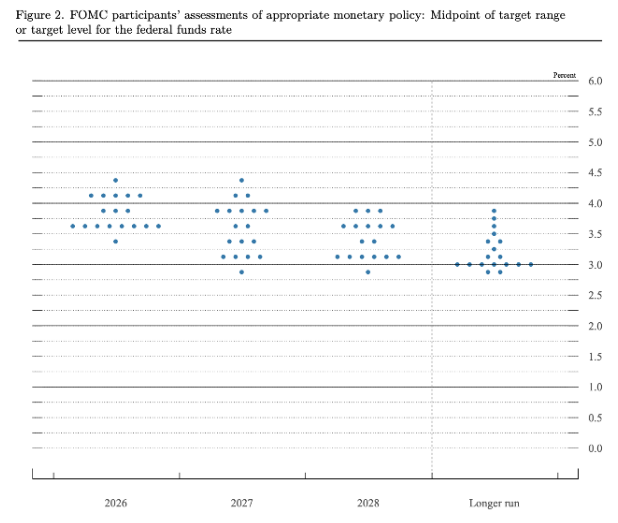
The Federal Reserve held its first rate-setting meeting since Kevin Warsh took the helm as Fed Chair. As was widely expected, the FOMC held rates steady at 3.5% to 3.75%. The vote to do so was 12-0, dispelling some analysts’ fears, for now anyway, that the Fed could become more fractured under Warsh’s leadership and with former Fed Chair Powell making the unusual decision to remain on as a Fed governor. The Fed also released an updated version of its “dot plot,” which tracks officials’ expectations for future rates. Notable, though, is that Fed Chair Warsh, who has suggested the Fed should communicate less to the market, opted not to indicate where he thinks future rates will go. The consensus from the Board’s Summary of Economic Projections is that rates will gradually nudge downward, toward a long run level of about 3%. The decision to keep rates where they are comes amid back and forth uncertainty about the situation in the Middle East. While President Trump signed a Memorandum of Understanding with Iran that purports to reopen the Strait of Hormuz, at the time of drafting, Vice President Vance’s planned trip to Switzerland for talks had been canceled, following Iranian pushback on renewed Israeli military activity in southern Lebanon.
Meanwhile, U.S. retail sales continued to climb, despite the uncertain economic climate. Census Bureau estimates suggest retail and food services climbed 0.9% in May vs. April to hit around $764Bn. That’s nearly a 7% jump vs. 2025. While Americans are still opening their wallets, the elevated cost of living remains a sore spot, with 53% of consumers citing daily living expenses as a challenge.
FinCEN OKs Sharing Fraud Data Under 314(b)
Last week, FinCEN updated its guidance regarding data sharing under Section 314(b) of the PATRIOT Act. The provision is intended to enable financial institutions to share data for the purposes of detecting money laundering and related financial crimes without worrying about potential legal exposure for privacy concerns. The update guidance specifies that 314(b) permits the sharing of fraud-related data and spells out what kinds of data banks can share. Data institutions can share include transaction records, device identification numbers, IP addresses, and behavior red flags, for example. It is worth noting that the change reflects FinCEN’s interpretation of what the PATRIOT Act allows and is not a change of underlying law. Bank trade groups welcomed the change, but would prefer greater certainty in the form of a change to law or regulation, rather than merely the guidance issued by FinCEN.
CFPB and FinCEN Guidance May Discourage ITIN Lending
In other FinCEN-related news, guidance from the agency, as well as from the CFPB, may discourage some lenders from extending credit to consumer borrowers who lack a Social Security number. Recent guidance from FinCEN and the CFPB urges lenders to take immigration status into consideration when making certain lending and compliance decisions. While not legally binding, industry stakeholders have suggested the impact is likely to be that institutions are less willing to bank or lend to consumers who supply an ITIN, or an individual tax ID number, as their main identifier. Undocumented immigrants working in the U.S. can apply for and use an ITIN to make legally required income and payroll tax payments, even if they lack legal immigration status.
Trade Groups Sue Oregon Over DIDMCA Opt Out
Multiple trade groups have filed suit to challenge Oregon’s decision to opt out of certain provisions of the 1980 Depository Institutions Deregulation and Monetary Control Act, commonly referred to as DIDMCA. The National Association of Industrial Bankers, the American Financial Services Association and the Online Lenders Alliance are suing to block Oregon from attempting to apply its 36% APR cap on loans originated by state-chartered banks based in other states. The fight in Oregon mirrors a similar battle over Colorado’s decision to opt out of the relevant portions of DIDMCA. State efforts to block out-of-state high-APR lenders using the tactic have picked up steam in recent years. Until recently, the only jurisdictions that had chosen to opt out were Iowa and Puerto Rico. Critics argue that opting out does nothing to lower consumer costs but does reduce choice, as the opt out only applies to state-chartered and not nationally-chartered banks.
Nuvei Acquires Payoneer
Canadian payment processor Nuvei has agreed to acquire payroll and cross-border payments company Payoneer. Nuvei will pay $7.40 per share in cash, for a total deal value of approximately $2.75Bn, the news release announcing the deal stated. The acquisition will enhance Nuvei’s capabilities to handle processing payments for small and mid-sized businesses, including freelancers and ecommerce sellers, with geographic coverage that includes Latin America and Southeast Asia. Phil Fayer, CEO of Nuvei, commented on the deal, saying, “The acquisition of Payoneer marks a defining step in Nuvei's evolution into a global financial infrastructure leader. By combining complementary capabilities, we can offer businesses a more complete platform to accept payments, send funds, issue cards, manage treasury and FX needs, and access embedded financial services – at scale.”
Digital Asset Raises $355Mn For Canton Network
Digital Asset, the creator of the Canton blockchain ecosystem, announced it has raised $355Mn in new funding. The round was led by Andreessen Horowitz’s crypto fund, a16z crypto, with participation from Abu Dhabi Investment Authority, Alumni Ventures, ABN Amro, 7Ridge, Coinbase Ventures, and numerous others. Digital Asset’s Canton Network is a “privacy-enabled” open layer-one blockchain network intended to facilitate the tokenization and trading of real-world assets, while meeting institutional privacy and regulatory requirements. Yuval Rooz, cofounder and CEO of Digital Asset, commented on the fundraise, saying, “Blockchain adoption will be defined by practical, production-grade applications in the world's largest markets. For capital markets to move onchain, institutions need infrastructure that reflects how they actually operate– with privacy, compliance, scale, and interoperability built in from the start. Canton was purpose-built for this.”
Trace Finance Announces $32Mn Series A
Trace Finance announced it has raised a $32Mn Series A. The round was led by CoinFund, with participation from Coinbase Ventures, Jump Crypto, Haun Ventures, Valor Capital, HOF Capital, Paxos, and others. Trace Finance is developing infrastructure to support cross-border payments and stablecoin settlement. The new funding will support Trace Finance’s geographic expansion and allow it to scale its transaction capacity. Bernardo Brites, cofounder and CEO of Trace Finance, commented on the fundraise, saying, “Stablecoins alone do not solve cross-border payments. Stablecoins plus regulated local bank infrastructure does. This round lets us deepen the banking, payments, and compliance infrastructure that global fintechs, exchanges, international banks and enterprises rely on to bridge digital settlement with trusted local financial systems.”
Citigroup Tests Tokenized Equities
Citigroup is rolling out its own tokenized stock offering, the company announced and the Wall Street Journal covered last week. Citi is developing a blockchain-based platform, initially targeting high-net-worth and institutional clients, that it hopes will be used to trade shares of private companies. For now, the offering is only available to foreign investors, but Citi plans to roll it out to U.S. investors over time. Citi’s platform is open, meaning it can be used by other financial institutions as well. Citi leverages depository receipts, a type of security that allows investors to buy shares in a foreign company, which are then “tokenized” such that they can be traded via a blockchain. Citi Head of Partnership and Innovation Bis Chatterjee commented on the announcement, saying in part, “As private markets continue to grow, so has the need for diverse and trusted access points. Our Digital Depositary Receipts product is designed to provide superior client service, safeguard assets and facilitate capital markets activity with the same rigor that underpins traditional financial markets.”
